




Dental Implants Without Bone Grafting

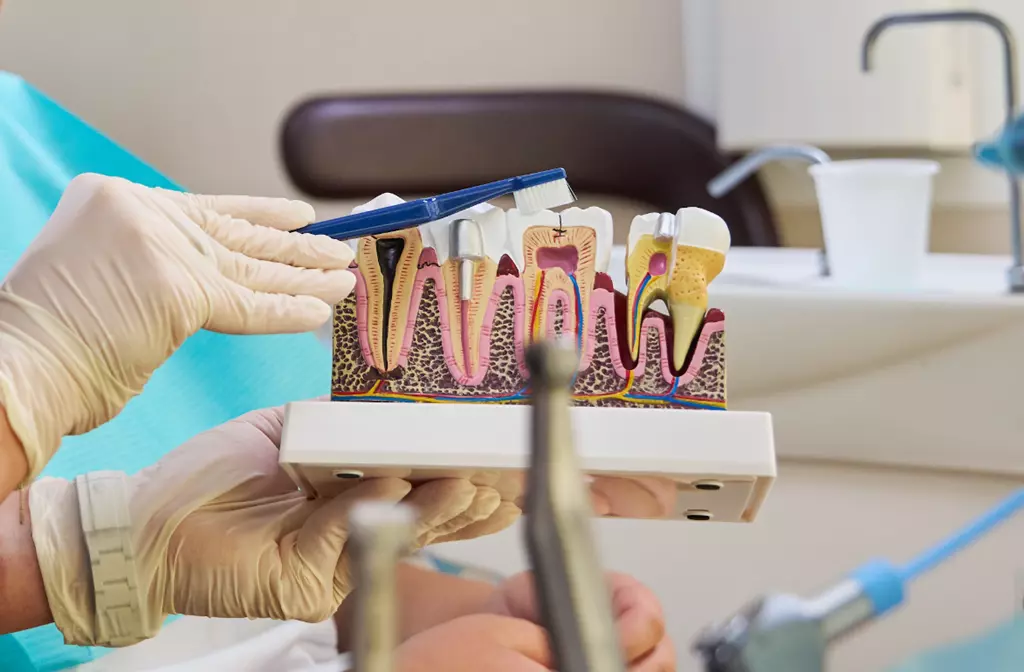
Why Bone Volume Was Once the Main Limiting Factor
At TRUE SMILE Dental Centre on Al Reem Island, we use detailed 3D assessments and carefully planned surgical techniques to determine the safest and most predictable way to place dental implants in Abu Dhabi for each individual case. Below is an explanation of how we evaluate bone quality, which clinical approaches may avoid grafting, and when additional support is still necessary.
Before 3D imaging became standard, clinicians relied on two-dimensional X-rays. These images were helpful but could not reveal the true height, width, and density of the jawbone. The default solution was to add bone when anything looked insufficient.
Typical reasons were:
- long-standing gaps where bone gradually thinned
- consequences of infection, cysts, or previous trauma
- naturally narrow areas of the upper or lower jaw
- sinus position limiting available height
While these issues still exist, the way we manage them has become much more precise and significantly less invasive.
How Implants Can Be Placed in Reduced Bone
The decisive factor is not simply “bone quantity” but the distribution of stable bone and the surgeon’s ability to work with it strategically. With modern digital planning, we can map regions of dense bone and use them to stabilize the implant.
Below are several techniques that frequently make grafting unnecessary.
Short, High-Strength Implants
Some implant designs are engineered for situations with limited vertical height. Their structure allows anchorage in areas once considered unsuitable for placement.
They are especially useful when:
- bone under the sinus is shallow
- vertical height in the lower jaw is reduced
- the patient prefers a less invasive solution
Despite being shorter, these implants are made from high-strength alloys that allow long-term function.
Strategically Angled Placement
In certain regions, “straight down” is not the safest path. Angling the implant allows the surgeon to avoid areas that are too thin and redirect it into stronger, denser parts of the jaw. This approach is extremely effective in the posterior upper jaw, where the sinus often limits vertical bone height.
Careful planning with CBCT ensures that the angle supports long-term stability and proper prosthetic design.
Slim Implants for Narrow Ridges
When the ridge is thin but structurally sound, slender implant systems can be used to create a secure foundation with minimal impact on the surrounding bone.
They may be considered when:
- a tooth space is naturally narrow
- the bone width is limited but healthy
- a minimally invasive recovery is desired
These implants integrate quickly, making them a practical alternative to more extensive augmentation.
Immediate Restorations in Selected Cases
When the bone is dense enough to provide primary stability, an implant may be restored with a temporary tooth on the same day. This preserves aesthetics and allows the patient to continue daily activities with minimal interruption.
The protocol is not suitable for every case, but when appropriate, it allows an efficient and elegant restoration.
Full-Arch Rehabilitation Using Fewer Implants
For patients missing many teeth, full-arch concepts allow the entire set of teeth to be supported by four to six implants. The technique relies on placing each implant in the strongest available bone and using angulation where needed. Because of this, grafting is often not required.
Patients who choose this option appreciate the functional, fixed result and the rapid improvement in comfort.
What Makes Avoiding Bone Augmentation Beneficial
When grafting can be safely omitted, patients often experience:
- fewer surgical stages
- a shorter overall timeline
- less post-operative swelling
- reduced complexity of care
The choice is not driven by convenience alone — it is based on achieving a stable, long-term foundation while minimising unnecessary procedures.
When Bone Augmentation Is Still the Right Choice
There remain situations where rebuilding bone is the most predictable way to create a secure environment for an implant. Examples include:
- severe loss of width or height
- large defects caused by past infections
- regions where the sinus floor is extremely close
- cases where the remaining ridge cannot support any implant safely
At TRUE SMILE, bone augmentation is performed using established, minimally invasive techniques and high-quality biomaterials. If this is the recommended path, the reasoning and expected outcome are explained in detail before treatment begins.
Why Patients Choose TRUE SMILE Dental Centre for Implant Treatment
Restoring a missing tooth requires precision — but also compassion, clarity, and a tailored plan. Our approach brings these elements together.
Accurate 3D Diagnostics and Digital Planning
Each implant case begins with a CBCT scan. This allows us to analyse bone shape and density in three dimensions, identify safe anchoring points, and understand how the final prosthetic needs to fit.
Digital planning supports three outcomes:
- safe placement
- long-term stability
- a natural, comfortable bite
Experienced Surgeons Who Manage Complex Anatomical Cases
Our implantologists have extensive training in full-arch reconstruction, graft-free methods, and revision procedures for implants that have failed elsewhere. Their goal is to use the least invasive approach that still offers durable, predictable results.
Comfort-Oriented Environment With Sedation Options
TRUE SMILE provides multiple comfort solutions:
- gentle local anaesthesia
- nitrous oxide for relaxation
- general anaesthesia for patients who prefer to sleep through treatment
These options help create a calm, controlled environment where patients feel well-supported from start to finish.
A Warm, Personalised Experience
Our team places great importance on communication. Every step — from diagnosis to aftercare — is explained clearly and patiently. This is particularly appreciated by families and professionals living on Al Reem Island who value transparency and comfort in their medical care.
Cost for Dental Implants Without Bone Grafting
Check full price-listOur doctors
We've assembled an international team of dental experts who use cutting-edge technology — from 3D diagnostics to anti-stress dentistry with nitrous oxide.


Dr. Natalia Lola
Specialist Orthodontist, CEO

Dr. Mustafa Sarikahya
Endodontics Specialist

Dr. Shan Alvi
Specialist Prosthodontist and Implantologist

Dr. Ramona Kleinschmidt Do Valle
General Dentist
Dr. Nawar Khafaji
General Dentist


Dr. Faten Souki El Jurdi
General Dentist

Dr. Tina Kumar
Specialist Endodontist

Dr. Karan Kalra
Specialist Orthodontist

Dr. Ali Gibreel
General Dentist, Restorative & Aesthetic Dentist
Dr. Tatiana Pestova
General Dentist

Dr. Yazan Abukhalaf
Oral & Maxillofacial Surgeon

Dr. Irina Evstafeva
General DentistWhy choose True Smile
International expertise under one roof
A truly global team with experience from leading clinics in different countries.

Anti-stress dentistry for adults and children
Gentle adaptation, calm communication, and nitrous oxide sedation when anxiety gets in the way.

Precise diagnostics, clear treatment plans
We explain every step, show options, and build a plan that matches your goals and budget.

Comfort-first, pain-controlled care
Modern anaesthesia and careful technique to keep treatment smooth and comfortable.
Family dentistry you can trust
From children's check-ups to complex adult cases, we care for smiles at every age.
Multilingual team
Our dentists and coordinators speak multiple languages, so you'll always feel understood.
CAPP MENA Dental Awards


Average rating our clinic

Don't know what service you need?
Leave your details and we will call you back

We answer frequently asked questions
Modern 3D imaging gives us a precise map of where stable bone is located. With the right implant design, careful angled placement, or short high-strength implants, we can frequently find a safe and reliable position — even in cases that would have required grafting just a few years ago.
Not necessarily. If we can place the implant in existing stable bone, no grafting is needed at all. Grafting is recommended only when there genuinely is not enough volume for safe long-term function — and even then, it is far less invasive than it used to be.
Yes. Short implants are made from the same medical-grade titanium alloys and are engineered specifically for reduced bone height. Clinical evidence shows they perform comparably to longer implants when planned and placed correctly.
The decision is based on a 3D CBCT scan and a careful evaluation of bone height, width, density and the position of nearby structures such as the sinus or nerve. We present every realistic option with clear pros and cons so you can choose the path that suits you best.
Usually yes — avoiding a separate bone-augmentation procedure means fewer visits, less surgical time and a shorter overall treatment plan. You receive a transparent estimate of all costs before any work begins.
Most patients eat soft food on the same day and return to a normal diet within 1–2 weeks. Full chewing strength on the implant comes after the final crown is fitted — typically a few weeks to a few months later, depending on your individual healing.
What Our Patients Say – Testimonials
Hear from the people who trust us with their smiles. Real experiences from our patients in Abu Dhabi.


Blog
Discover fun facts, expert advice, and practical tips to help you understand your teeth better and take great care of your smile.

Abu Dhabi’s Hidden Dental Crisis: How Desert Heat & AC Are Silently Damaging Your Teeth
Read More +
Invisalign vs Braces in Abu Dhabi: Differences, Cost Factors & Who It’s Best For
Read More +TRUE SMILE Dental Centre Wins 4 Awards at the Prestigious CAPP MENA Dental Awards
Read More +
Best Dentist in Abu Dhabi: 10 Signs of Truly Exceptional Dentistry
Read More +
Why Are Temporary Prostheses Placed on Implants First?
Read More +
How We Learned to Grow Teeth: From Early Experiments to the Breakthroughs of 2025
Read More +
Is Pain After Root Canal Normal?
Read More +
You’ve Started Orthodontic Treatment with Clear Aligners in Abu Dhabi
Read More +


