





Pulpitis treatment in Abu Dhabi, with gentle, precise care
At TRUE SMILE Dental Center we examine and treat teeth under a dental microscope. Magnification lets us remove only what is necessary, find tiny cracks and canals, and work more gently. Most people leave the appointment relieved and confident about the next steps.

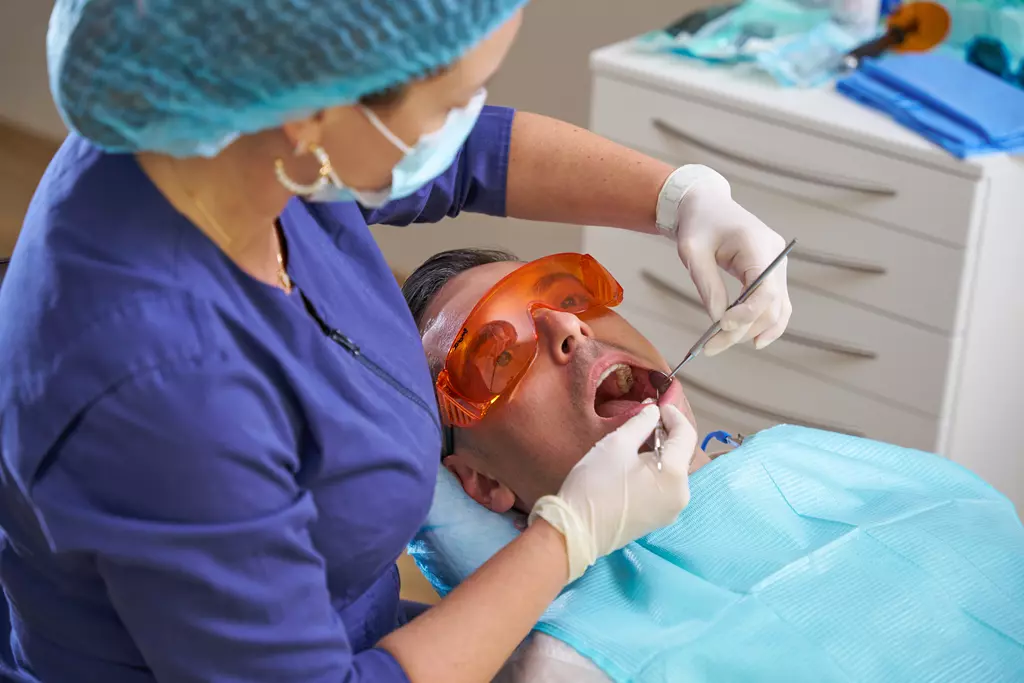

What pulpitis is, in everyday words
Pulpitis means inflammation of the nerve and blood vessels inside the tooth. The most common reason is deep tooth decay. Other causes include fractures, a heavy bite on one spot, or repeated dental work on the same tooth.
There are two main forms.
- Reversible pulpitis. Cold or sweet foods make the tooth zing for a few seconds, then it settles. There is no pain on its own. The pulp is irritated but still healthy enough to recover once we remove the irritant and seal the tooth.
- Irreversible pulpitis. Pain lingers after cold or heat. You may feel a deep throb that starts by itself, often at night. Biting can feel sharp or electric. In this case the pulp cannot heal without active treatment such as vital pulp therapy or a root canal.
Both conditions are treatable. The key is an accurate diagnosis and a good seal against bacteria.
How we diagnose the problem
Your description matters. Tell us when the pain started, what triggers it, and what helps. In the clinic we perform:
- Simple tests for temperature and gentle biting, which help us understand the stage of inflammation.
- Careful X-rays of the tooth. In some cases we use 3D imaging to see the exact shape of the roots or to look for cracks.
- Inspection under the microscope when we start treatment. This helps us confirm what we saw on the tests and images.
You will hear plain language at every step. I will show you the images and explain what they mean for you.
If the pulp can recover, here is what we do
When the picture fits reversible pulpitis, our aim is to remove the irritant and let the pulp calm down.
- Remove the decay carefully under the microscope.
- Place a protective liner if the cavity is very deep.
- Isolate the tooth with a rubber dam so saliva does not contaminate the work.
- Place a bonded, tooth-coloured filling with a tight seal.
- If the bite is high, we adjust it a little.
- You can use simple pain relief medication for a day or two if needed.
Most people feel much better immediately. Any sensitivity that remains usually fades over several days. This is effective reversible pulpitis treatment and it helps you avoid more complex procedures.
If the pulp cannot recover, here are your choices
When tests point to irreversible pulpitis, there are two proven paths. We choose together based on your symptoms, the tooth, and your goals.
Vital pulp therapy, also called a pulpotomy
Sometimes only the top part of the pulp is inflamed while the rest is still healthy. In those cases we remove the diseased portion, place a modern bioceramic material over the healthy pulp, and seal the tooth tightly. The benefits are shorter appointments, preservation of natural vitality, and often lower cost than a full root canal. This option is also very helpful in young teeth and in some cases of chronic hyperplastic pulpitis, when a red, mushroom-like tissue grows from a very open cavity.
Root canal treatment
For most adult teeth with symptomatic irreversible pulpitis, a root canal is the most predictable way to stop the pain and keep the tooth. Here is what that means in practice.
- We make the tooth completely numb and isolate it with a rubber dam.
- Under the microscope we create a small opening to reach the canals, remove the inflamed pulp, and clean the inside of the roots.
- We shape the canals gently with flexible instruments and wash them with solutions that dissolve tissue and disrupt bacteria.
- We fill the canals three-dimensionally and place a strong core to seal the access.
- Many teeth can be treated in one visit. Some complex molars or retreatments are safer in two visits.
After a root canal, back teeth usually need an onlay or crown to prevent cracking. We discuss this in your plan so there are no surprises later.
Pain control before, during, and after treatment
- Getting numb. Even teeth that are hard to freeze can be numbed predictably with modern techniques. Please tell us if you still feel anything and we will add more.
- Sedation. If you are anxious, we offer nitrous oxide. When appropriate we can also use oral or IV sedation. You will be safe and monitored at all times.
- Aftercare. Mild tenderness to biting is normal for one to three days. Chew on the other side and take the pain relief we recommend, unless your physician has told you otherwise. Call us immediately if you notice swelling, fever, or pain that increases rather than decreases.
A note about antibiotics. Antibiotics do not treat inflamed pulp and they do not shorten toothache when there is no swelling or fever. They are reserved for spreading infection or situations where urgent dental care is temporarily impossible. The quickest relief always comes from proper dental treatment.
Chronic and hyperplastic pulpitis, and when we use crowns
Some teeth have long-standing inflammation with little or no pain. Others grow a soft tissue polyp inside a very open cavity. In these cases we either perform vital pulp therapy or a root canal, then restore the tooth with a bonded onlay or crown. Teeth that have lost a lot of structure or that show cracks need a protective restoration to spread chewing forces and prevent fractures.
Treatment under a microscope for accuracy and tooth preservation.
- Clear explanations and photos of your case.
- Modern pain control and options for sedation if you are anxious.
- Same day sealing of the tooth whenever possible to prevent reinfection.
- Transparent pricing and a written plan before we start.
What to do today if you are in pain
Avoid heat. Sip cool water for short relief. Take the pain relief you usually use, unless your physician has advised against it. Do not start leftover antibiotics at home. They rarely help and they can hide symptoms.
Call us and tell the team that you have night pain or pain to heat. We will find the earliest convenient time to see you.
If the pain has already started and you cannot wait for a scheduled appointment, we also treat severe toothache — emergency dental care during our opening hours.
Cost for Pulpitis treatment in Abu Dhabi, with gentle, precise care
Check full price-listOur doctors
We've assembled an international team of dental experts who use cutting-edge technology — from 3D diagnostics to anti-stress dentistry with nitrous oxide.



Dr. Natalia Lola
Specialist Orthodontist, CEO

Dr. Mustafa Sarikahya
Endodontics Specialist

Dr. Shan Alvi
Specialist Prosthodontist and Implantologist

Dr. Ramona Kleinschmidt Do Valle
General Dentist
Dr. Nawar Khafaji
General Dentist


Dr. Faten Souki El Jurdi
General Dentist

Dr. Tina Kumar
Specialist Endodontist

Dr. Karan Kalra
Specialist Orthodontist

Dr. Ali Gibreel
General Dentist, Restorative & Aesthetic Dentist
Dr. Tatiana Pestova
General Dentist

Dr. Yazan Abukhalaf
Oral & Maxillofacial Surgeon

Dr. Irina Evstafeva
General DentistWhy choose True Smile
International expertise under one roof
A truly global team with experience from leading clinics in different countries.

Anti-stress dentistry for adults and children
Gentle adaptation, calm communication, and nitrous oxide sedation when anxiety gets in the way.

Precise diagnostics, clear treatment plans
We explain every step, show options, and build a plan that matches your goals and budget.

Comfort-first, pain-controlled care
Modern anaesthesia and careful technique to keep treatment smooth and comfortable.
Family dentistry you can trust
From children's check-ups to complex adult cases, we care for smiles at every age.
Multilingual team
Our dentists and coordinators speak multiple languages, so you'll always feel understood.
CAPP MENA Dental Awards


Average rating our clinic

Don't know what service you need?
Leave your details and we will call you back

We answer frequently asked questions
If the pulp is still reversible, relief is often immediate once the cavity is cleaned and the tooth is sealed. Lingering sensitivity usually settles within a few days. If it is irreversible, the pain stops after vital pulp therapy or a root canal, most often within the first 24 hours.
Yes. A pattern of pain that starts on its own, worsens with hot drinks, and sometimes feels better with cold water is common in symptomatic irreversible pulpitis. The pain coming and going does not mean the tooth is healing. It means the nerve is unstable and needs treatment.
You will be numb. You may feel vibration or pressure but not sharp pain. Most people need only simple pain relief afterward and feel normal within a day or two.
Usually not. Antibiotics do not fix inflammation inside the tooth. They are used only when there is spreading infection, swelling, fever, or when true dental care is delayed for a medical reason.
Often yes, especially in front teeth and premolars. Molars with complex canals or retreatments may need two visits. We plan around your schedule and travel.
We coordinate with your obstetrician. Urgent care is usually safe in the second trimester. We limit imaging to what is essential and choose anaesthetics carefully.
Early pulp changes are functional rather than visible on a standard X-ray. Clinical tests and the view under the microscope guide the decision. If needed, focused 3D imaging shows details that a flat image misses.
We place a strong core the same day to seal the tooth. Back teeth usually need an onlay or crown to prevent cracking. You come in for a quick check in a few weeks, then resume routine checkups.
See the guide above. After the examination you receive a written plan with exact fees and timings.
What Our Patients Say – Testimonials
Hear from the people who trust us with their smiles. Real experiences from our patients in Abu Dhabi.


Blog
Discover fun facts, expert advice, and practical tips to help you understand your teeth better and take great care of your smile.

Abu Dhabi’s Hidden Dental Crisis: How Desert Heat & AC Are Silently Damaging Your Teeth
Read More +
Invisalign vs Braces in Abu Dhabi: Differences, Cost Factors & Who It’s Best For
Read More +TRUE SMILE Dental Centre Wins 4 Awards at the Prestigious CAPP MENA Dental Awards
Read More +
Best Dentist in Abu Dhabi: 10 Signs of Truly Exceptional Dentistry
Read More +
Why Are Temporary Prostheses Placed on Implants First?
Read More +
How We Learned to Grow Teeth: From Early Experiments to the Breakthroughs of 2025
Read More +
Is Pain After Root Canal Normal?
Read More +
You’ve Started Orthodontic Treatment with Clear Aligners in Abu Dhabi
Read More +


