A Simple Explanation of the Two-Stage Method
This treatment unfolds slowly and intentionally.
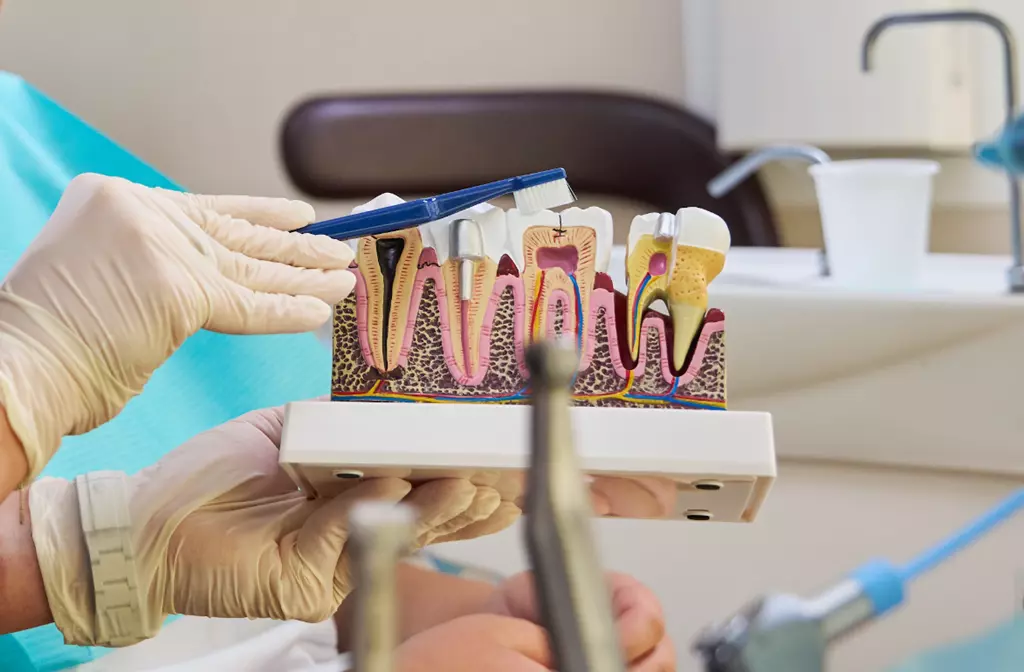
The first visit focuses on placing a small implant into the jawbone so it can rest and adapt without pressure. After the bone has fully connected with the implant, the second phase begins: shaping the gumline and attaching a custom-made crown.
The method is often chosen when someone wants the most stable foundation possible, or when the bone needs time to recover before supporting a new tooth. Instead of asking the bone to carry a temporary crown right away, we allow it to heal quietly beneath the gum tissue.
Why Patients Often Prefer This Approach
A calm environment for healing
By letting the implant remain untouched during its early months, the bone can form a firm hold around it. This is helpful for patients whose bone quality varies or who lost a tooth a long time ago.
Helpful when the bone needs rebuilding
If the jawbone has thinned, a graft or sinus lift can restore the needed height. The two-stage sequence naturally accommodates this: the foundation is strengthened first, and the implant receives its final restoration only when the tissues are ready.
A result that feels secure
Patients often describe their restored tooth as “part of me again.” Because the implant is given time to stabilize, the final crown tends to feel especially natural once placed.
Comfort from start to finish
We offer local anaesthesia as well as calming options such as nitrous oxide or IV sedation. This allows anxious patients, or those planning longer visits, to feel at ease throughout treatment.
A crown crafted just for you
Your crown is shaped and coloured to harmonise with the surrounding teeth. Thanks to our digital process, the final tooth fits comfortably and looks like it truly belongs.
When This Method Is Usually Recommended
Your dentist may discuss this option if:
- one or several teeth are missing
- the bone requires time or support before an implant can carry a crown
- a gradual approach aligns better with your anatomy
- immediate placement is not ideal
It may not be suitable for people with active oral infections, certain health conditions, or those unable to undergo minor surgery. A CBCT scan and consultation help determine whether this path is right for you.
How Treatment Progresses
Step 1: Your consultation
We begin by listening—what bothers you most, what outcome you hope for. A CBCT scan is then taken to show bone density, height, and the structures surrounding the missing tooth.
Step 2: Digital planning
Using 3D software, your dentist designs the placement of the implant with careful attention to angles, depth, and available bone.
Step 3: Preparing the foundation
If the bone needs reinforcement, grafting or a sinus lift may be recommended. Healing can take several months, but we stay in close contact to guide you through each phase.
Step 4: Placing the implant
The implant is placed gently under local anaesthesia, with optional sedation for additional comfort. Once positioned, it is covered so the bone can integrate without disturbance.
Step 5: Quiet healing
During the next few months, the bone attaches to the implant naturally. You may eat and speak normally, simply avoiding heavy pressure on the area.
Step 6: Shaping the gums
A small component is added to help the gums form a natural contour around the future crown.
Step 7: Creating the new tooth
A digital impression allows us to design a crown that follows your natural bite and appearance. When the crown is attached, the tooth functions and feels like part of your own smile.
The Technology and Care Behind Your Treatment
Every step is supported by modern tools that help us plan clearly and work gently. We use CBCT imaging, digital design software, guided surgery when appropriate, titanium or zirconia implant systems, and a digital laboratory process. These tools do not rush treatment—they refine it. Combined with TRUE SMILE’s calm, personalised approach, they make each stage feel organised and reassuring.
How You May Feel After the Process
Most patients describe several changes once the final tooth is in place:
- chewing becomes easier and more balanced
- speaking feels more natural
- the smile looks complete again
- confidence gradually returns
- the restored tooth feels steady and long-lasting
Routine dental visits and daily care help protect the tissues around the implant and extend its lifespan.